
MYSPAZA NEWS
TREP relaunch raises funding ceiling to R3 million for township and rural businesses
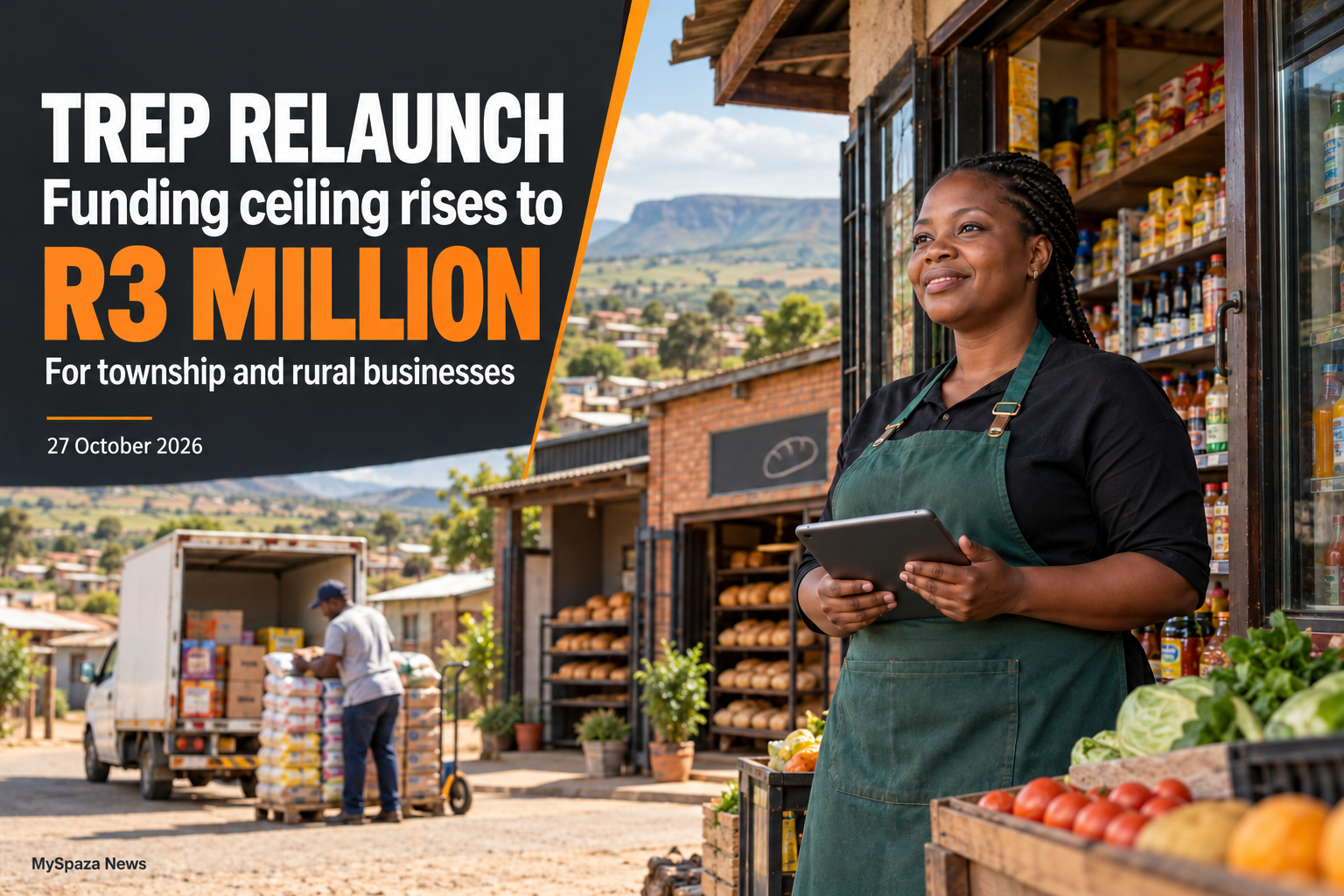
What the enhanced TREP announcement means for local entrepreneurs: funding limits, repayment terms, business support and practical preparation.
Township and rural entrepreneurs have a renewed funding opportunity following government's announcement of an enhanced Township and Rural Entrepreneurship Programme (TREP). Minister of Small Business Development, Stella Tembisa Ndabeni, was scheduled to lead the official relaunch on 27 October 2026 at Seshego Stadium in Polokwane, Limpopo.
Reporting note: This article is based on the department's official relaunch advisory and published programme information. A post-event report or speech had not been verified at publication.
The Department of Small Business Development says the redesigned programme aims to improve access to affordable finance, shorten application turnaround times and strengthen the support businesses receive after funding.
What has changed?
The announced improvements include: • Funding of up to R3 million, increased from the previous R1 million ceiling. • A favourable 5% interest rate. • Repayment periods of up to 60 months. • A repayment moratorium of up to six months. • Blended financing and stronger business development and post-investment support.
These are programme parameters, rather than an automatic entitlement to the maximum amount. The relaunch announcement does not specify the grant-to-loan split, detailed assessment rules or how interest will be treated during a repayment moratorium. Applicants should obtain these details before accepting funding.
Source: https://www.dsbd.gov.za/minister-to-relaunch-enhanced-township-and-rural-entrepreneurship-programme/
Who is the programme intended to support?
The department's published programme information identifies informal, micro and small enterprises and cooperatives operating in township and rural economies. Listed sectors include clothing and textiles, bakeries, cooked food, retail, automotive services, personal care and artisan businesses.
Its published eligibility criteria include CIPC registration, including cooperatives; full South African ownership; township or rural operations; and requirements relating to employees, municipal licensing, SARS, UIF and business banking. Some requirements allow applicants to undertake registration or licensing processes. Entrepreneurs should confirm which conditions apply to the enhanced programme and when each must be satisfied.
Source: https://www.dsbd.gov.za/township-and-rural-entrepreneurship-programme-trep/
Why this matters for local businesses
For a small business owner, access to finance is useful only when the funding matches a workable business plan.
A bakery may need equipment to increase production. A retailer may need better stock availability and reliable replenishment. An automotive workshop may need tools that allow it to serve more customers. In each case, the practical question is the same: will the investment generate enough additional income to cover operating costs and repayments?
The higher funding ceiling creates room for larger projects. However, entrepreneurs should apply for the amount their business can use productively and repay sustainably. A bigger loan can create pressure if sales, margins and cash collections do not grow as expected.
The emphasis on support after funding is therefore significant. Equipment and working capital should be accompanied by sound pricing, bookkeeping, stock control and customer development.
What entrepreneurs should do now
As practical preparation, not a substitute for the official application checklist, business owners should: 1. Organise registration, ownership and relevant compliance documents. 2. Keep bank statements and accurate sales and expense records. 3. Obtain quotations for the equipment, stock or improvements required. 4. Prepare a cash-flow forecast showing how repayments would be covered. 5. Explain the expected benefits, including additional sales, productive capacity and jobs.
SEDFA has publicised TREP information sessions offering guidance on qualifying criteria, application follow-ups and new submissions. Business owners should seek the current application route directly from the agency.
Source: https://za.linkedin.com/company/small-enterprise-development-finance-agency
The department's forms page also lists TREP application documents. Because older material remains online, applicants should verify that they are using the forms and conditions applicable to the enhanced programme. Enquiries can be directed to info@dsbd.gov.za or 0861 843 384, option 2.
Source: https://www.dsbd.gov.za/forms
The opportunity deserves attention. Its success will ultimately be measured by businesses receiving appropriate funding on time, using it productively and building sustainable livelihoods in the communities where they operate.
Member comments
Join the conversation. Keep comments respectful and relevant. Your display name and comment will be public; do not share personal or banking details.
Checking your sign-in…
Loading comments…